Category: Uncategorized

  • A Dim Synergistic View of Our Nuclear Age

    By Rodney Schmidt Fall 1972
    For Sociology 101
    Washington State University

    Idealistically any act that advantages one group or society should at the same time advance all societies. One group should not be allowed to advance at the expense of the rest of the universe. Using this synergistic approach, I shall comment on the American society’s nuclear policies to reason if they are justifiable or not.

    The central focus of American defense is on nuclear power. Now, just what can this nuclear power do for America and for the other societies of the world? We can use our nuclear power as a threat of deterrent. This could provide a form of security for America, but only under one very important premise, namely that we never actually use our nuclear power. Our security would however be very much to the disadvantage of the rest of the world.

    Any nuclear blast will add to the radiation level of the Earth. The less radiation around the world the better. The necessity to develop nuclear potential will increase the earth’s radiation level which is a disadvantage to all the world including America. The United States is reputed to have enough nuclear weapons to destroy the earth. That would be of no advantage to anybody, so we must assume this potential was developed with the exclusive intention that it would never be used. Even minor detonation would add to the radiation level.

    One of the goals of our nuclear power was to give America a high level of security. This biggest goal is its biggest failure. Our generation is now the first to live under the threat of total annihilation. Any country with enough people to steal a bomb can now flout ace cards. This very real bomb threat puts security at an all time low for the whole world. What we have is a hazardous mechanism that depleted extensive resources to produce, polluted the world to develop, was designed in the hope that it would never be used, and in the end destroyed any concept of security.

    Wake up, America. Security comes from having friends, not from intimidated subordinates.

    There is one truly mutually advantageous nuclear development. Nuclear medicine displays true synergy for techniques like x-rays, radium surgery and the like have unquestionably not only benefitted America, but all humanity.

  • Change in Our Society

    A Reaction Paper for Sociology 101
    By Rodney Schmidt Fall 1972
    Washington State University

    Our written history is a book of change. Revolution, conspiracy, riot, political organization… all forms of pursing change. It is not the purpose of this paper to show the obvious, that change does occur in all societies. To avoid an irrelevant proof, we shall assert that change is constantly going on. Our objective is to rationalize why change is occurring. Being less than divine, the purpose of change will remain a mystery, but at least a few cause-effect relationships can be rationalized.

    What are some of the causes of change? Change is a constant victim of a chain reaction. New ideas are only possible after relating to old ones. Today’s new ideas are tomorrow’s old ideas. The competition builds and technology skyrockets. How did this technological nightmare ever get started? Even before muddle-fingered man began to scramble things, the universe was on a changing time scale. Glaciers came and left. Climates changed to such extremes that tropical jungles are now buried under desert sands. Some organisms like dinosaurs could not adjust and are no longer alive. Man became keen at adjusting to adverse environments. Man became so keen that he conquered every intolerable niche on earth and now looks to outer space. Man up to a point was the greatest success story ever written. Man was able to adjust to everything… except other men. Today man’s greatest threat is not nature, but man himself.

    What are some of the effects of human success? Overpopulation is still the most devastating effect. Nature has not given up yet, though. She has her last resort weapons of starvation and disease. So far nature has been very successful on small scale warfare. Plagues hit Europe in the filthy cities of the 17th and 18th centuries. Starvation is killing in India. Malnutrition is dampening the minds of entire nations. Overpopulation means man competing against man. Discontent and intolerance grow. Man sees that other men have it easier than he and greed begins to rule. Man needs to be unique and has even resorted to assassination just to get a headline. Men want and kill other men in bloody wars to get what they want. Overproduction, pollution, crime… all are rampant in our changing society. The tempo is getting faster! Politicians broadcast needed changes. Our goal should be the ideal, the perfect society.

    The fact that people want to change is evidence enough that we have not yet known the ideal perfect society. Are we coming closer to or getting farther from our “best of all possible worlds”? Tomorrow is forever gone. Whoever said history repeats itself lacks real depth of the long run society.

  • Wildland Recreation Special Project submission to WSU

    Dated September 28, 1973. For a wildland recreation class during Rodney’s attendance at Washington State University for his Wildlife Biology degree.

    The sun, the land… and man. Progress has blasted man so far, so fast that already he has lost sight of where he came from, and if he fails to recognize the trends he may very well end right back there again. The earth, land, dirt… man has walked on it, abused it, devastated it, dusts it from his shelves every day, and is at an alarming rate even burying it beneath asphalt and concrete, and more people. People have grown so callous that they freely litter someone else’s world. They seem to fail to realize the very real world they are in. In the end, the law of the land will prevail, with or without man.

  • Rodney’s Love

    Uncle Rod had a way of speaking straight to my heart. His words carried love, belonging, and the reassurance that I was always enough.

    1. “You will always be family to me.”
    2. “I don’t know how you could have done any better.” He said this when we were talking about how my life turned out.
    3. “My door is always open.”
    4. “I love you, too.”
    5. “You are a good girl.” Rod said this during a visit to hospice. He was in unbearable pain as his esophageal cancer had spread throughout his body. No amount of painkillers could ease his suffering. Yet even then, he spoke with love.
    6. “You are my priority.” Rod wanted to tell me his stories and gift all his journals and photography for me to preserve and share.

    I have promised myself that I will do all I can to preserve and share Uncle Rod’s legacy.

  • Reflections

    Written in May 2011

    Supreme stupidity is answering your country’s call and doing its bidding without first determining whether you understand much less believe in the cause. I must plead guilty for unquestionably marching off to Vietnam, a country and culture and its issues of which I knew nothing about. It took me into my second tour to finally wake up and discover my country was dead wrong to get involved. My country has since made many such wrong involvements. In fact, the great intelligent human species has a long unending history of horribly wrong decisions.

    Technologically, humans are a marvel. Living in harmony with the rest of the creatures of the planet-humanity is a dismal failure.

  • Gift of Nature

    Written in 2011

    Biophilia, our innate affinity for and connection with nature. I have always had a strong fascination with nature. As a child I could spend hours watching the activity on an ant hill. I loved to catch fireflies in a jar and sneak them into my bedroom and let them go so I could watch their magic flashing until I tumbled off to sleep. My Mom had to wonder why there were so many bugs in my room. I would leave the porch door open in the morning, and they seemed to find their way out on their own.

    Growing up an Iowa farm boy, I loved going barefoot to the far corner of our farm to bring the cows home to milk. I would watch the Upland Sandpipers and Plovers land on the fence posts with their wings over their heads before they would delicately fold them up and tuck them in to their sides. The Bobolinks I called bumble bee birds. The songs of the Western Meadowlarks were sweet music to my ears. Morning Doves and pheasants would add to the symphony. Those were good days.

    Almost every farm had milk cows who needed pasture and hay ground. We had our own oat field for grain and straw livestock bedding. We had big gardens and lots of chickens and pasture breed hogs. The farmstead grove had lots of grackles, robins, morning doves, and seldom seen but nightly heard screech owls.

    I would dance with excitement in the pounding rain of June thunderstorms. I would wade in ephemeral road ditch pools and catch tadpoles, frogs, and even a few mudpuppies. There was no end to the grand outdoor show nature put on every day.

    In the man versus nature saga, we have lost too many things. But in other ways we have made significant gains.

  • Outrage Brewing

    America Drifting Off Course
    February 5, 2010

    Preface

    Life doesn’t come with a set of instructions. Like this brand new Made in America Apple computer, it too came right out of the well-crafted box without any manual on how to open it up, plug it in, or turn it on. You just have to open it up, look it over, and push the button and get started, and find out what it can do. For the duration of my life, I will never know all the things this marvelous machine is or could do.

    My life, my brain, and this much broken body are like this computer. We will never know what we were fully capable of. We just have to push that start button and discover where life will lead us.

    I am just beginning the 60th year of my life. Over the past six decades I have seen much of the very best and some of the worst that America has to offer. I am the youngest son of a youngest son. I made a very deliberate choice not to have any children of my own. If you decide to stay with me, you will discover why. I know that if I were to die right now, I would very soon be quite forgotten as have most of the multitudes that have gone on before me. I hope my life will mean more than just an inscription on a stone that over time will be worn away to sand.

    I only know of great men like Aristotle, Thomas Jefferson, Thoreau, Teddy Roosevelt, or Robert Frost because their legacy has been left behind in the libraries of the world. This then shall perhaps become the legacy I hope to leave behind. I have known evil men who deliberately left many pitfalls in my path. I have known friends who far surpassed what was expected of them. If I can in any way help others to avoid a pitfall, if I can help anyone remove the blinders of the illusion of what America has become, if only I can share with you a philosophy that you too feel in your heart, and you can discover that you are not alone, then I can fulfill a supreme goal of leaving this world a better place for me having been here.

    Follow me then if you will, and I will take you on a journey that begins as a young farm boy growing up in rural Iowa who was expected to follow the Lutheran German immigrant farmer path laid down by my grandfathers. The trail will lead to a rebirth in war torn Vietnam. There I discovered that I and America were losing its way.

    The history I learned in school was glossed over and very one-sided. America has an evil side that nobody seemed to think and certainly not spoken about. I was brought up to believe with great pride that America was the greatest country on earth. America has long gotten off the great path of do unto others as you would wish them to do unto you. If you really believe that America, The United States of America, has become the ideal and greatest nation that she can be, then you need to wake up like I did that fateful day off doing my country’s bidding in Vietnam. Wake up your America and help her get back on her path to honor and never live in a blind illusion that there is no shame in what we have done and continue to do. We can and must strive to do better. Let this tail of one man’s trials to find the good path for himself, his country, and the planet begin.

    Chapter 1
    I Am Not Like You

    Two roads diverged in a wood, and I…
    I took the one less traveled by,
    And that has made all the difference.

    ROBERT FROST, “The Road Not Taken”
    December 17, 1949

    These are the facts as I know them to be. Of course, I do not remember tumbling out of my mother’s womb all slimy and wet, expelled out of the safe dark warmth into the light, but I know it to be true.

    My official Certificate of Live Birth, State of Iowa, birth number 114-49-059306 by the Iowa State Department of Health, Division of Vital Statistics says I was born in Kossuth County at the Sabin home 2/3 mile north of Burt. The certificate goes on to say I was born a single male (not a twin) on December 17th, 1949, at 9:25 PM. It says my father and mother were both white, and my parents were farmers living on their own farm at Lone Rock, Iowa. My father was Robert Edward Schmidt, Jr. and was 34 years old. My mother, Verona Helen Luedtke was 29. It goes on to say my mother had three other living children at the time.

    It also said mother had no other live children who had died, and none stillborn after 20 weeks of pregnancy. The official signature was one Bahne K Bahnson D. O. Later in life I came to know this small-town doctor as I had him stitch up a wound or two, and I remember his unusual vaccination technique. He would pinch the target area and hold the hypodermic needle like a dart and literally throw it like a dart followed by the injection.

    At any rate, I have no reason to suspect that the official record is anything other than the truth. Now if you are of an astrological bent (which I am not) your astrologer can tell you the rest of my story. The rest if you read on. If you are a birth order believer, you can further pigeonhole my fate, but I am not impressed with birth order fanatics either.

    So now you know I was born a statistic, a number among numbers, but you can already see from the very beginning that I am different from you. I was not born a native American Indian, although I always wished I had been. I was not born black or poor. I was not born to wealth or privilege.

    I cannot tell you whether I was naturally nursed or a bottle-fed baby. I have no memory of those early days, and I never asked my mother about it. If I had asked her, she would likely have not told me anyway. Such things were never discussed in her home. By the time I came around, a baby was old stuff, and I knew of no baby pictures ever taken of me.

    My parents were responsible providers. I never went hungry, was adequately clothed, and always had a sound roof over my head. My father was a hard-working farmer who had just made the switch from farming with horses to tractors when I came into the family. Dad raised corn, soybeans, alfalfa, milked a couple dozen Holsteins, raised hogs, laying hens, and beef cattle.

    We had a big garden and apple trees and did our own butchering and made smoked sausages. We usually raised 100 roosters for butchering. Mom canned meat, fruit, and veggies.

    This was the environment I was born into. My parents were both of German descent and brought up in a Lutheran tradition. Mom was particularly religious and did her best to instill it into us. I was taught not to question, but to accept things, and one day I would understand. Until that day I was to believe unquestionably what my German ancestors had been taught.

    So much for what I was supposed to be, but now for who I was and eventually became. I became a loner. I was for a long time the “baby” of the family and hated being called that as I grew older. I was brought up in an environment where love was rarely shown. I do not recall any occasion where my folks told me they loved me or ever heard them say the love word to each other. Hugs and kisses and affection were not as a rule shown in our house. Keeping busy was the rule of the day.

    The rural community I grew up in was a wonderful cooperating neighbor helping neighbor society. Today it is nothing like that. The world and way of life were undergoing rapid change. World War II was over, and the baby boom was on. I will tell you a bit about the great country life of my youth, because that way of life is gone, and you should know what has been lost.

    The Schmidt’s and the Marlow’s were the dominant names in the neighborhood. My dad lived within a few country miles of Uncle Fred, Uncle Leo, and Uncle Martin (Meyer). Uncle Tom had moved to Minnesota around the time I was born but initially farmed in the neighborhood too.

    Today most farmers are individualists, but not so when I was growing up. Dad and my uncles had one bailer between them. During haying time, we went from farm to farm getting everybody’s hay in. It was a social as well as working event. The ladies would cook up feasts for the working men. There was one silage chopper between my uncles, though they each had their own tractors and corn planters. At butchering time I have fond memories helping out, being a part of stuffing the casings, and tying off the ends, and taking turns cranking the stuffer. It was hard work but fun at the same time.

    Everybody was telling tales and catching up with gossip while they worked. We worked long into the night until finally the rings were put on sticks and hung in the smokehouse. It was often midnight when the smoke fire of corncob and apple wood was finally lit. Then there was cleanup. All the grinders, stuffers, tubs, and knives had to be spotlessly cleaned. We ate lunch with fresh products and played cards as the meat smoking took place. Then my cousins and I were free to play “kick the can” in the dark. Great fun. Hard but important work, and great socializing. Belonging.

    Today it is nothing like the days I grew up in. Few of the local farmers milk cows or raise hogs. They have been delegated to factory farms, and assembly line milking. Most farms in what my neighborhood was no longer raise livestock, and hence few pastures, and not much haying. Now it is corn and boring soybeans. That and CRP (Conservation Reserve Program) being paid not to farm or graze land.

    Now to dig deeper into who I was as a kid. My grandfathers never took me fishing or hunting or hardly ever spoke to me directly. Both of my grandmothers had passed on before I was born, so they were totally out of the picture of my upbringing.

    Dad was a very busy man. He worked hard at farming and began renting more land than the 120 acres he had been working. He was on the coop elevator board, president of the school board, an elder of the church, and a very good pool player with the Lone Rock pool hall gang.

    And that is where his book ended. Maybe I will find more of it somewhere in all these boxes of papers. My fear is that it was lost in one of his computer crashes that were unretrievable.
  • Quotes by Rodney

    • Enjoy a life lived well and build a treasure chest of fond memories to carry you through old age. Don’t get caught in old age filled with regret at not having really lived. (Undated.)
    • There is nothing sadder than an old man whose only future is his past. (January 2019.)
    • I didn’t know it at the time, but I had been trained and asked to go off and fight a war by those who already understood that it was lost but sent me anyway. Never again would I ever naively and blindly beckon to the call of my country without question. My honored country was to thoroughly disillusion me in far off Vietnam. But it wasn’t always that way. The enlightenment came painfully slow.
    • I was born the 4th and last son of a good and honorable Iowa farmer.

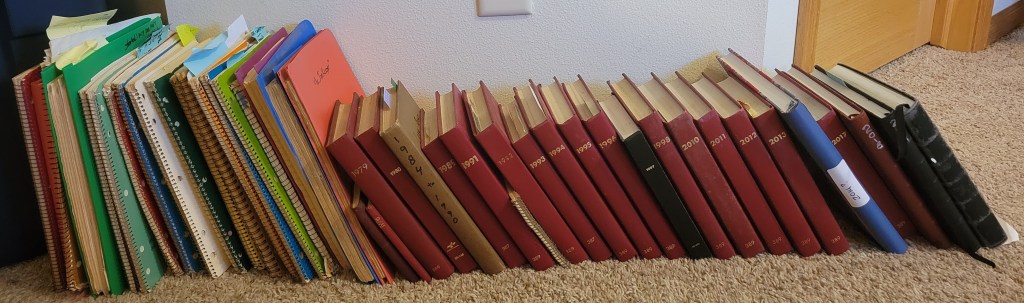
    What I’ve read so far makes it clear that Rodney cherished his father, Robert Edward Schmidt Jr. I hope, in time, to type out every one of his stories. I’ve already found 42 journals spanning from 1967 to 2020. More writing continues to surface, tucked into manila folders, books, albums, scrapbooks, and boxes of old photographs and slides.

    Rodney left behind 42 journals—some typed (thank you, Uncle Rod) and others handwritten in cursive, their pages now faded with time. In addition, I found bundles of letters sent to him by family and friends, including many from his years in Vietnam. Some of these letters were taped right into the journals while others were found in manilla folders.

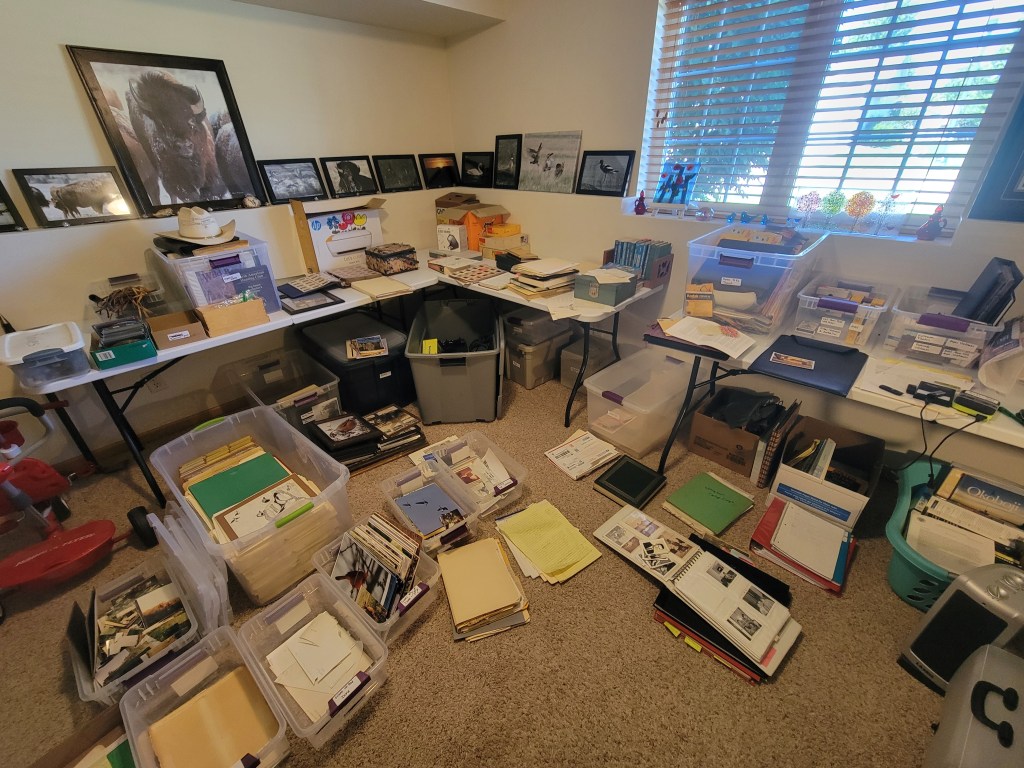
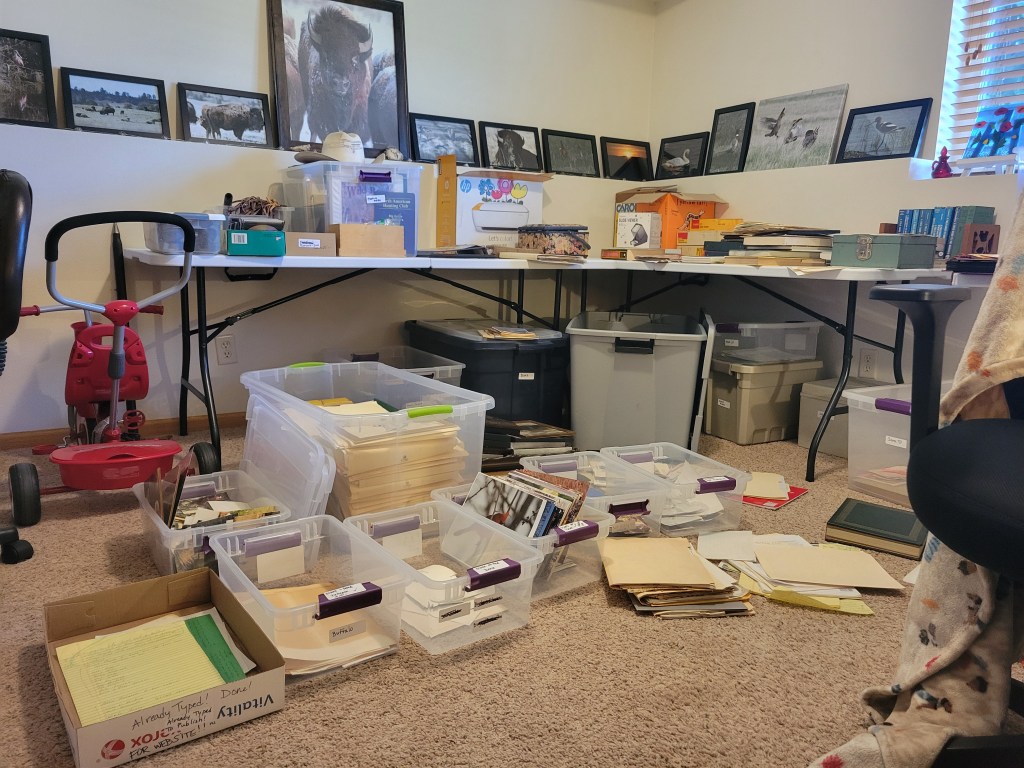
    He always dreamed of writing a book about his life and even began a few times. Sadly, the drafts were lost when two of his computers failed. Even the experts could not recover them. This website is my way of honoring that dream—by sorting through an entire bedroom filled with his writings, photos, and memories, and sharing them with you.

  • Emailed Story

    August 13, 2025

    This morning, I opened my inbox to find the very first email sent to RodneySchmidtLegacy@gmail.com. I asked Wayne if I could share his story, and he kindly said yes.

    Wayne, thank you for reaching out and telling me about the time you met Uncle Rod. I truly hope more messages like yours will come in so I can pass them along to everyone. Reading your story this morning filled my heart.

    These are Wayne’s words, just as he sent them.

    Jenny:

    I met Rod through my stepmother, Sarah Strom, who lived in the house on the hill near him outside Garden Grove. Actually my first meeting with him was when Sarah was in her final hours of life. She had cancer and was at a friend’s house in Des Moines who was giving her palliative care. I heard that Sarah was likely on her way out so raced down to Des Moines to see her. To my surprise, there was an unknown neighbor there (Rod) and we hit it off immediately. I loved Rod’s wisdom and humor in such a trying time. He really made a difficult time much easier for me.

    Later, I met Rod often when I was visiting my sister, Kibbee, who had moved into the house after Sarah’s passing. He was such a fun, wonderful, and kind person and I believe I am a better person for having known him. My sister told me of your website, and I look forward to reading his writings that you post.

    Thanks for keeping his memory alive,
    Wayne Strom

  • Rotary Luncheon Speech (1985)

    The following is a speech Rod wrote for a Rotary luncheon dated December 10, 1985 (just shy of his 36th birthday). It gives great insight into why Rod chose to live as a naturalist or a conservationist as some people called him. I hope you enjoy reading this journal entry as much as I have.

    Good afternoon, Gentleman: Back to the Basics

    Have you ever had your basic survival challenged? I have several times. There are three events that most people seem to have forgotten that have so threatened my well-being that I have found it necessary to seek a new direction in life.

    Rod goes on to describe three events (or “bombs” as he called them) that occurred:

    1. Have you ever gone to a grocery store and found the shelves empty?
    2. Have you ever waited in line for hours to fill your tank with gasoline only to find the pump had run dry before you got there?
    3. Have you ever gone to the grocery store and overnight watched the prices of even non-essential items double or triple?

    Plus, one more, have you ever had your savings outstripped by inflation?

    I have. I was living in Seattle when not the Russians, but my fellow Truckers, broke the sacred trust and stopped putting food on the grocery store shelves: The Trucker’s Strike of 1975.

    Have you forgotten about the Arab oil embargo of 1973?

    Remember the great coffee price explosion? How everyone quickly tried to hoard coffee and the price skyrocketed?

    I don’t know about you, but I can’t just sit back and forget about these things. They were no longer theoretical threats like a nuclear holocaust. They actually happened. My survival was for a moment threatened. Fortunately, those threats did not last for long, but it was a warning.

    There I was, a biologist, a man with a fair understanding of the land, sitting behind a desk writing Government Impact statements on the environment, and I was totally dependent for my survival on grocery store shelves like everybody else.

    Could I survive extended threats of these kinds? I started searching the library and bookstores for the Euell Gibbon’s Handbook of Edible Wild Plants type books. Reading was not enough; I had to challenge myself and prove to myself that I could do it.

    I went to the mountains for 30 days with nothing but a survival knife. I was delighted to learn that, not only could I survive, I hiked over 300 miles in rugged mountain terrain, got in fantastic physical shape, and gained 10 pounds besides. That was in October. The roots were full of starch, berries were easy to come by, and trout were easy to catch.

    Then I went to the Everglades and spent a winter living out of my canoe. I spent 30 days in the Baja desert to test my drought survival skills. The desert almost got me.

    At any rate, I had concluded that I could no longer assume that grocery stores could be totally depended on. My fellow humans in the richest nation in the world had let me down, but the land never did. The land provided.

    My relationship with the land grew. I found myself no longer content to be able to survive on public land. Jim Watt clearly showed me how easy it is threatening public lands.

    It was time to acquire land of my own. I sold my beautiful house in the city and quit my city job. I could only manage to buy 20 acres, but it was my 20 acres. I am now working to be totally self sufficient on my own land.

    In less than three hard working years, I transformed an abandoned farmstead and cornfield into a place that can provide 100% of my physical needs. I pay no rent or heat bill, and I could easily derive 100% of my food and clothing and shelter from the land if I needed to.

    This was not just a hobby. It was my retirement program.

    We are a meat and potatoes culture. Some would rename it a burger and fries society.

    So, ask yourself: 30 years from now, what are potatoes going to cost you? How much will you have to pay for tomatoes and meat?

    Ask me and I say potatoes and tomatoes will cost me the same next year as this year, and it will be the same for me 30 years from now. My potatoes take 75 days of sun to grow, 120 days for winter keeper. Tomatoes take 60 days of frost-free sunshine, always have, always will.

    Conclusion: Now I can truthfully say if the Arabs kept all their oil, I’d be okay. If all the farmers went broke and produced no more food, I would survive. If a storm or worse took out my electrical lines, I would still be snug even in the winter. I may never be rich, but I think I’m doing just fine.

    List I found of Rods titled: Harvestable from my land – 20 acres:

    • Animals: beavers, bison, deer, elk, foxes (gray, red), frogs, groundhogs, minks, muskrats, opossums, rabbits, raccoons, squirrels, turtles
    • Fish: bass, bluegill, catfish
    • Birds: ducks, geese, partridge, pheasant, turkeys
    • Fruit and vegetables: apples, asparagus, cherries, grapes, mulberries, plums, raspberries, rhubarb, strawberries
    • Firewood: Oak, walnut, maple, green ash, boxelder
    • Other: arrowhead, bees (honey and pollen), burdock, cattail, maple syrup

    Rodney was also able to tan hides, sew buckskins, make moccasins, make home trapped and tanned muskrat mittens.

    Other notes I found in this journal:

    I try to live on the land without depleting it.

    I have found my connection with the land.